

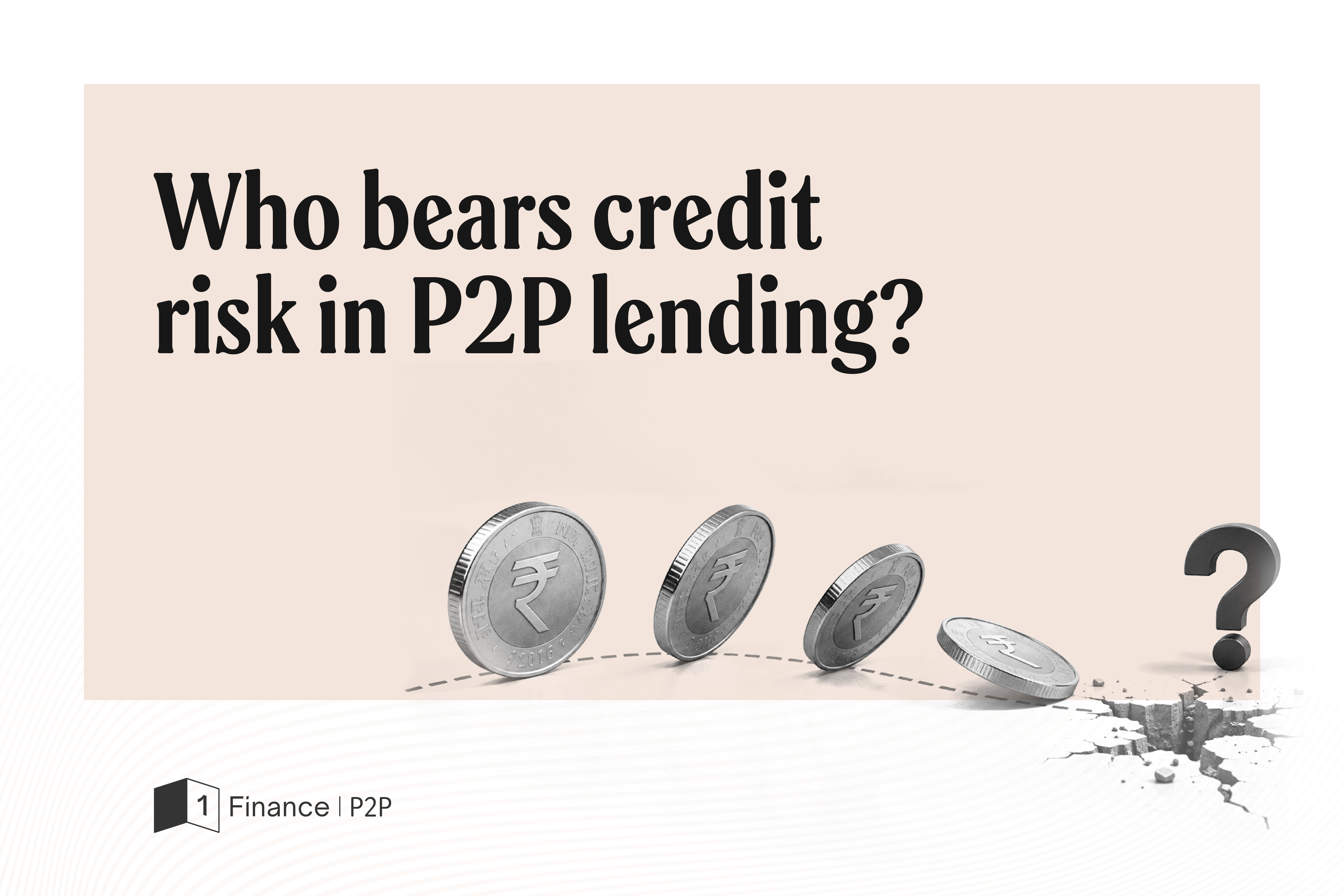
In P2P lending, you lend money to a borrower and expect them to repay it over the agreed loan tenure. But what happens if the repayments are delayed or stop altogether? This repayment risk is an inherent part of lending through a P2P platform and is central to understanding credit risk in P2P lending.
So, before you begin lending online, it’s important to understand where this risk comes from and what it means for you as a lender.
Understanding credit risk in P2P lending
Credit risk, also called default risk, is the possibility that a borrower fails to meet the agreed repayment terms. This could mean missing an instalment, delaying the payment, or being unable to repay the outstanding loan amount. In P2P lending, the financial consequences of a default are borne by the lender.
The lender bears this risk because a P2P lending platform acts as an intermediary between borrowers and lenders. Under the RBI's Master Directions, a P2P lending platform can't provide a credit guarantee or credit enhancement against a borrower's default. If the borrower fails to repay, the platform doesn't make up the resulting shortfall. The lender, therefore, remains exposed to the financial loss arising from the default.
Factors that contribute to the credit risk in P2P lending
Looking at the factors that can influence repayment gives lenders a better sense of the credit risk associated with a P2P loan.
Income stability matters for loan repayment.
A borrower may lose their job, see their business income fall, or face an unexpected financial emergency. A P2P loan, affordable when it was taken out, can become difficult to repay when such unpredictable situations arise. This risk is difficult to identify in advance because the borrower's financial position can change after the loan is approved.
Existing debt adds to the borrower’s financial burden.
A borrower who is already repaying existing loans has less disposable income available for another EMI. A high debt-to-income ratio can indicate that a large share of the borrower's income is already committed to debt repayments. Frequent credit enquiries and missed EMIs on existing loans can provide further evidence that the borrower's finances may already be under pressure.
A loan's structure can also affect the risk you take as a lender.
When assessing a loan, pay particular attention to two things: the tenure and the interest rate.
A larger loan amount means more of your capital is tied to a single borrower, which can result in a larger rupee loss. Tenure affects the duration of that exposure. With a longer-tenure loan, your capital remains committed for a longer period, during which the borrower’s financial circumstances may change before the loan is fully repaid.
Interest rates can also reflect the credit risk associated with a P2P loan. A higher rate may be offered where the perceived repayment risk is higher, but the rate alone doesn't tell you the level of risk involved. Compare it with rates for similar loans on the same platform and consider the borrower’s risk profile to understand the context behind the rate.
Economic conditions can affect borrowers' repayment ability.
Rising inflation can increase household expenses and leave less income available for monthly repayments, while a weaker economy can affect salaries, business revenues and cash flows. If the same pressure affects many P2P borrowers at once, defaults can rise across a portfolio rather than being limited to individual loans.
RBI P2P lending guidelines cover some risks, but they don't eliminate them
RBI-registered P2P lending platforms must comply with regulations covering areas such as fund handling, disclosures and platform operations. These requirements establish how the platform must manage and facilitate lending, while repayment of each loan remains dependent on the borrower.
One such requirement is the use of escrow accounts for handling funds. Escrow arrangements help ensure that money collected from lenders and borrowers is transferred for its intended purpose rather than being used by the platform for other activities. This safeguards the movement of funds through the platform, while the borrower’s repayment remains a separate matter.
The RBI also requires P2P platforms to disclose loans that have remained unpaid for 90 days or more, which are classified as non-performing assets (NPAs). These disclosures give lenders visibility into the platform’s lending and repayment experience, including defaults that have already occurred.
Credit risk remains an inherent part of P2P lending. The regulations and disclosures give you information to assess the lending opportunity, but the decision still requires you to consider the borrower's financial profile, the loan amount, tenure and factors that could affect repayment. Looking at these factors together can help you make a more informed lending decision.
Key Takeaways
- A P2P platform facilitates the transaction but doesn't guarantee repayment or cover losses from a borrower’s default.
- Several factors can affect the repayment ability of a borrower.
- RBI rules provide a framework for P2P platforms, but repayment still depends on the borrower.

Tejashree Satpute
Tejashree specializes in in-depth financial research and content strategy. With over 5 years of writing experience, she turns complex market data into accessible insights. Outside of finance, she enjoys classic literature, poetry, and long walks.