
The problem you told us about
The portfolio screen shows where your lending stands today, but it does not show how this month compares with the last or whether your money has gradually become concentrated in one place. You should not have to log in and assemble these numbers yourself.
What is changed
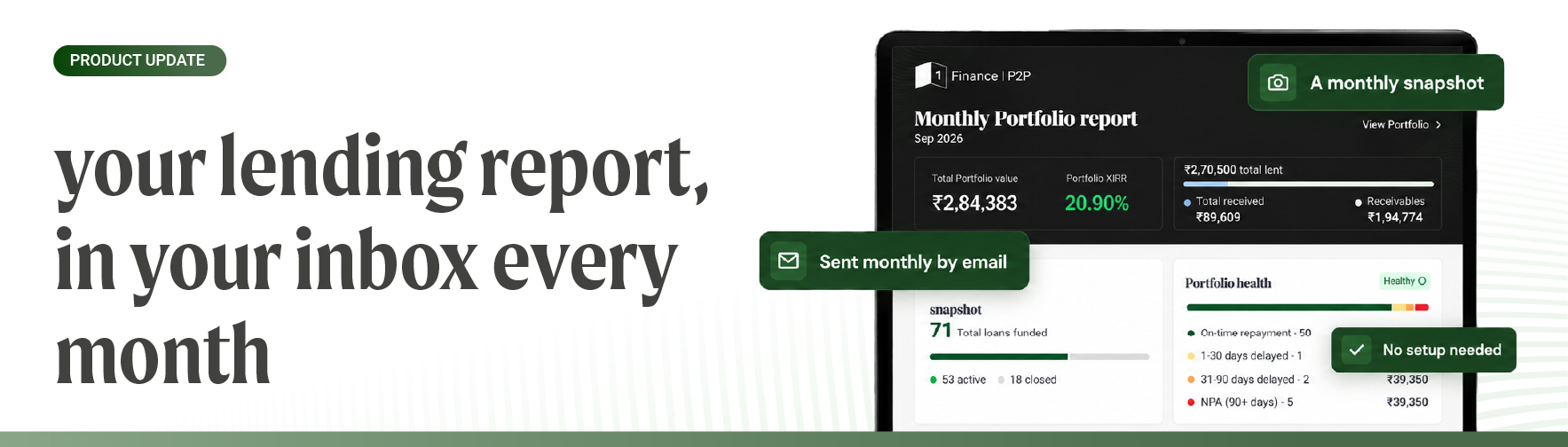
From next month, every active lender will receive a portfolio report by email once a month. The report covers:
- Performance: Your return since you started lending, total amount lent, borrowers funded and interest earned.
- Portfolio status: Loans funded, active and closed loans, outstanding principal, recovery from closed loans and non-performing loans.
- Delinquencies: Loans paying on schedule, loans 1 to 30 days late, loans 31 to 90 days late, overall delinquency percentage and specific loans under watch with days overdue.
- Cash flow: Principal and interest received, how much has been reinvested and what is scheduled to arrive next month.
- Diversification: Average exposure per borrower, BQS band distribution, loan tenure mixes and salaried borrower share.
- Concentration: Largest single borrower exposure against the RBI cap, exposure to the top five and top ten borrowers, and concentration by employer and loan purpose.
The report is a snapshot of your portfolio on the date it was generated. If the app shows something different later, both can be correct because repayments or overdue status may have changed after the report was generated.
The return figure is calculated before the platform facilitation fee and excludes loans classified as non performing. Interest earned shows the interest that has actually been earned.
The recovery figure for closed loans helps you track whether loans are closing after completing their tenure or settling for less than the amount owed.
The report also highlights smaller delays from day one, helping you spot loans that have started slipping before the issue becomes larger.
Why is this important
The report helps you compare your lending month by month instead of looking at isolated numbers.
Pay particular attention to two things:
- Loans that have started slipping: A four-day delay and an eighty-day delay can mean very different things, so the delinquency buckets give you more context than one overall percentage.
- Money that has come back but has not been reinvested: If your received amount keeps increasing while your reinvested amount does not, your returns can gradually wind down even when no loan has failed.
Your exposure to one borrower may be within the regulatory cap, but spreading your money across more borrowers can reduce the impact of any one borrower on your overall portfolio.
Where to find it
The report will be sent to your registered email address once a month if you are an active lender. There is nothing you need to switch on.